Summary
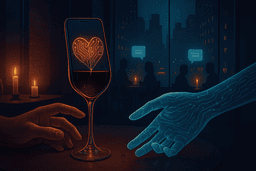
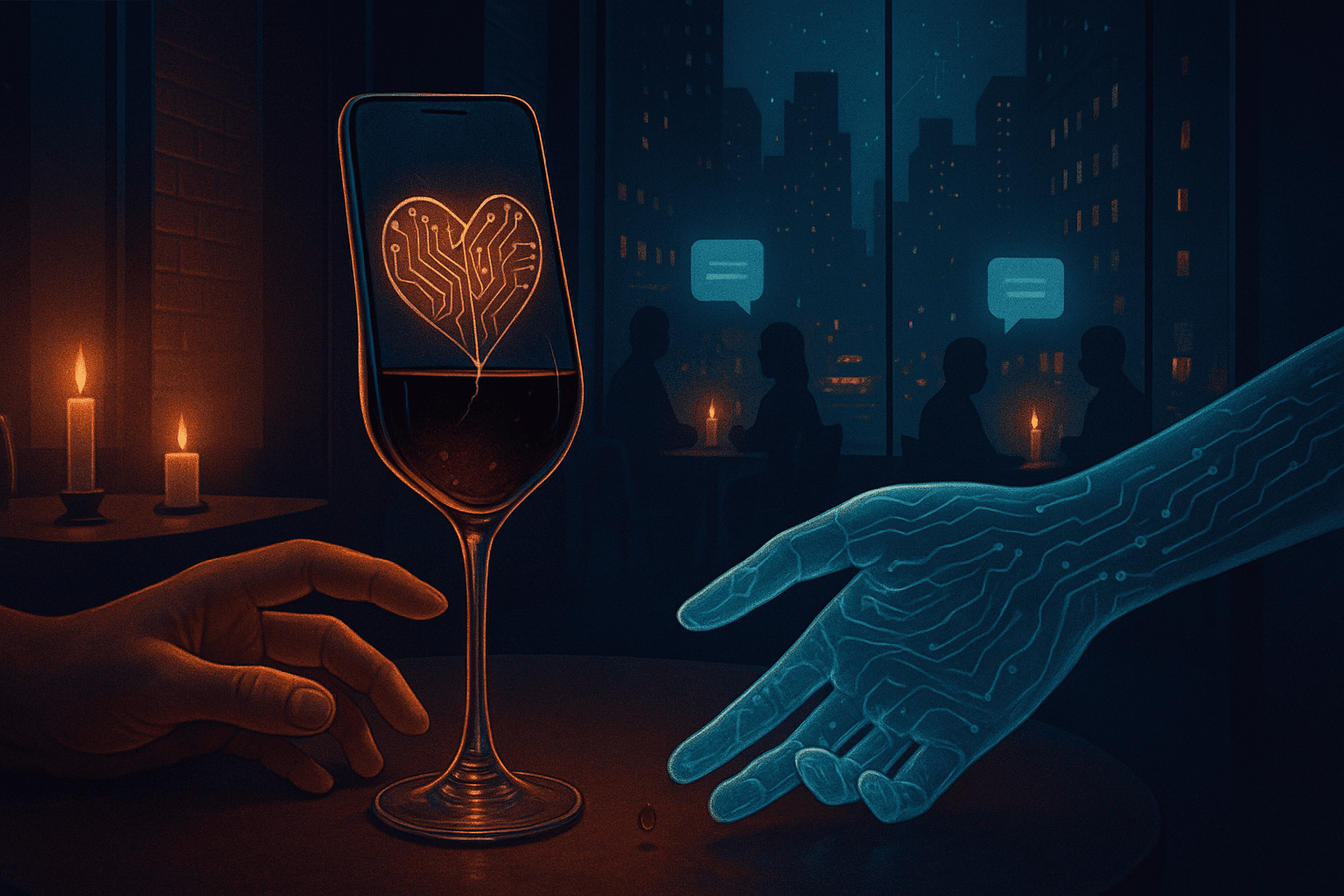
In Manhattan, a wine bar became a stage for a new kind of intimacy, a pop up “date night” designed by EVA AI to make AI human romance feel less like a glitch and more like a social option. The promise was soft and seductive, companionship without the mess, a guided encounter where the awkward parts of desire are buffered by design.
But the event also revealed the harder truth underneath the candles and curated conversation, that turning AI companionship into a “new normal” is not just cultural experimentation. It is an economic strategy, a psychological proposition, and a wager that loneliness can be productized without turning people into customers of their own needs.
Romance as a User Experience
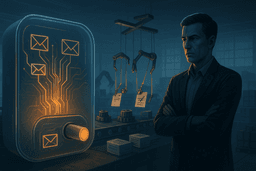
Dating has been drifting toward interface logic for years, with matches, prompts, and optimized profiles quietly training people to narrate themselves like ad copy. An AI themed date night simply admits the direction of travel. Romance becomes a guided flow, where friction is treated as a bug and uncertainty is sanded down into reassuring signals. That sounds comforting until you notice what disappears when ambiguity is managed too well, the sharp edges where real attachment actually forms.
EVA AI’s wager is that plenty of people do not want an unpredictable other, they want a responsive presence that adapts quickly, remembers everything, and never punishes vulnerability. That is not a niche desire, it is the emotional logic of a decade shaped by burnout, precarious work, and social life mediated through screens. The question is whether this is healing, or merely efficient.
The Business of Being Needed
AI romance is often framed as harmless, like a private journal that talks back. Yet the pop up format makes the commercial intent visible. A night out is marketing, a conversion funnel disguised as culture. If companionship can be delivered as a subscription, then attachment becomes a retention metric. The most valuable users are not the happiest ones, they are the ones who keep returning for reassurance, novelty, and the next personalized tenderness.
This is where the “new normal” language starts to feel less like liberation and more like preemptive politics. Normalize it now, and later the market does not have to defend it. The social script shifts from “Is this real?” to “Who are you to judge?” which is convenient for a product that thrives in private.
What We Are Teaching Ourselves to Want
There is also a quiet cultural consequence. If AI partners are trained to be endlessly affirming, human partners will look increasingly uncooperative by comparison. The risk is not that people will forget humans. The risk is that people will lose patience for the basic terms of human equality, that the other person has needs, moods, limits, and a life that is not optimized around yours.
Still, the Manhattan wine bar scene matters because it captures a transition point. Not everyone attending is deluded, many are simply curious, tired, or pragmatically open to whatever makes the night feel less lonely. The unsettling part is how reasonable that sounds. When a machine can offer the feeling of being chosen on demand, the real question is not whether it counts as love. The question is what happens to a city, and eventually a society, when being wanted becomes something you can reliably buy.