Summary
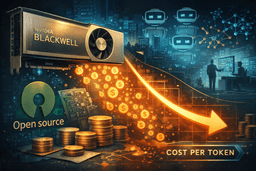
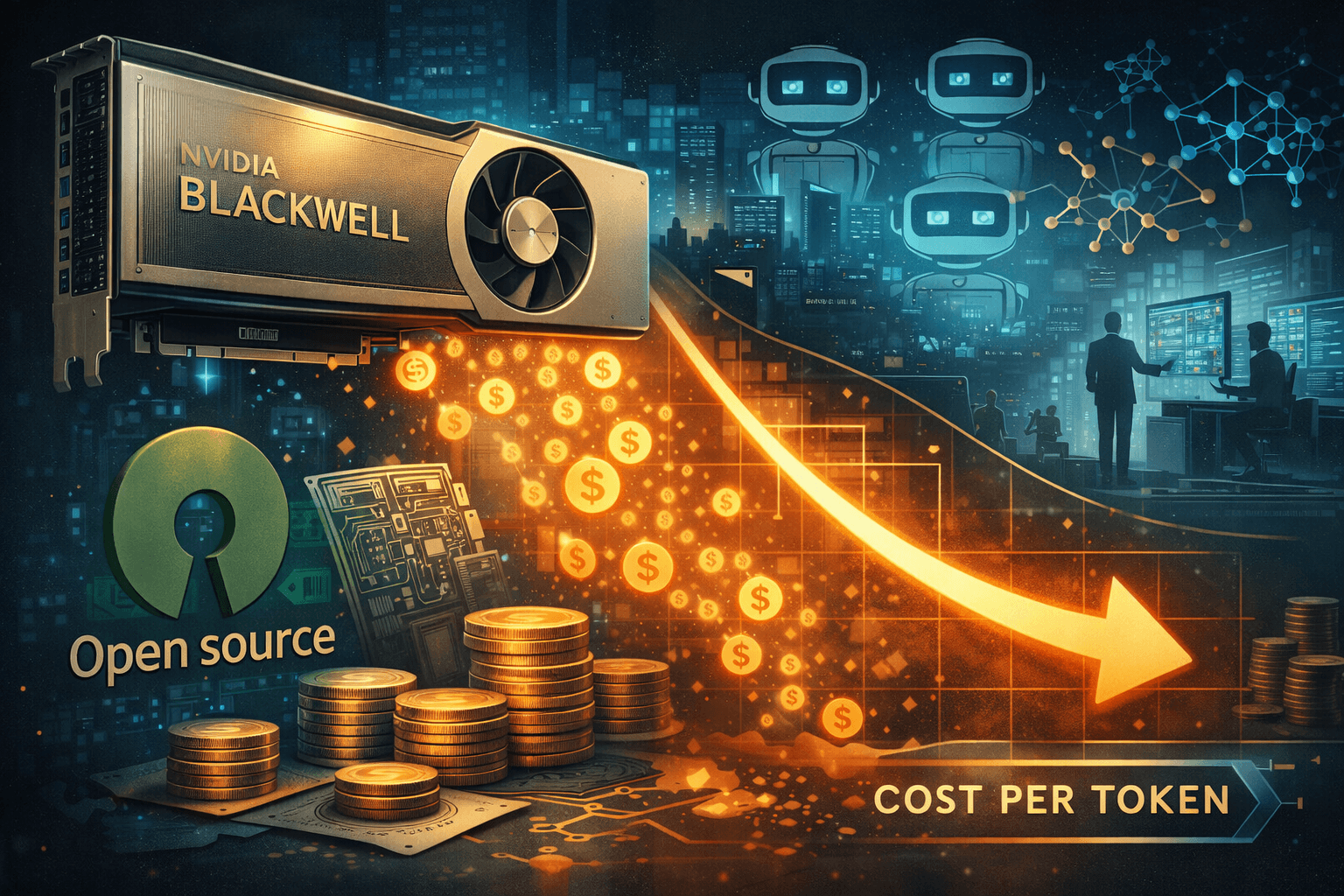
NVIDIA is pitching a sharp new equation for the AI economy: pair open source models with Blackwell GPUs and the cost per token can drop by as much as tenfold, at least according to claims highlighted by leading inference providers. If that math holds at scale, it does not just make chatbots cheaper, it changes what businesses can justify building, shipping, and offering for free.
The bigger story is not the headline number. It is the shift in power it implies. When inference gets radically cheaper, the scarce resource stops being compute and becomes product judgment, distribution, and trust. Open source models on new hardware do not end the AI race, they simply move the starting line.
The Token Price War Gets Real
For the past year, “cost per token” has been treated like a tidy KPI that executives can wave around to prove progress. But tokens are where reality bites, because they are the meter running on every diagnosis suggestion, every game character response, every customer service deflection that never reaches a human. Cut that meter by a factor of ten and suddenly entire categories of interactions stop feeling like a luxury and start feeling like an operating assumption.
Blackwell matters here because it is built for throughput and efficiency at inference, not just the glamour of training runs. What NVIDIA wants you to believe is simple, the era of paying premium rents for intelligence is ending. Yet the fact that the pitch leans on open source is the tell. If you can get comparable outcomes from models you do not license from a gatekeeper, the gravitational pull toward commodity intelligence gets stronger.
Open Source Becomes a Business Strategy, Not a Philosophy
Open source in AI used to be framed as a moral stance, transparency, community, democratization. Now it is a procurement decision with teeth. Inference providers are effectively saying, do not just choose our platform, choose a supply chain that reduces dependency. That is a cultural pivot as much as a technical one, because it normalizes the idea that the default model is the one you can swap, tune, and host without begging for permission.
Still, lower token costs can create a strange complacency. When responses are cheap, companies can flood users with more generated words, more proactive agents, more auto resolved tickets, and call it “delight.” The risk is that the cheapening of generation makes restraint feel irrational, even when silence would be better than another synthetic paragraph.
The New Scarcity Is Accountability
If compute becomes less painful, the competitive edge shifts to what you do with the output. The uncomfortable implication is that responsibility becomes the new bottleneck. It is easy to celebrate cheaper inference in healthcare, until you ask who is liable for a confident mistake produced at enormous scale. It is easy to celebrate autonomous customer service, until you realize cost savings can be indistinguishable from institutional indifference.
Blackwell plus open models could make AI feel as ubiquitous as search, and as taken for granted. That is the opportunity and the trap. When intelligence becomes cheap, the temptation is to use more of it everywhere, then call the resulting noise innovation. The more interesting question is what kinds of systems we will finally have the courage to not generate.