
Summary
Spotify is publicly flirting with a provocative claim, that some of its best developers have not written a line of code since December because AI systems now do the writing. The company points to Claude Code and an internal tool called Honk as accelerants, turning prompts and intent into working software.
The boast is meant to signal efficiency, but it also exposes a deeper shift. If elite engineers are being rewarded for not typing, then the job is mutating from craft into orchestration, and the risks, incentives, and power dynamics are mutating with it.
From craftsmanship to conduct
For decades, software culture treated code as both artifact and identity. The best engineers were the ones who could hold the system in their head, shape it with taste, and earn authority through the scars of debugging. Spotify’s message suggests a different prestige, the best developers are those who can persuade machines to do the scar work while they keep their hands clean.
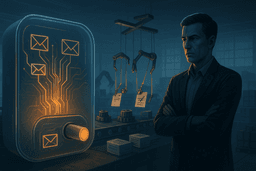
This is not simply automation, it is a change in what counts as contribution. When Claude Code produces the patch and Honk routes it into internal workflows, the human moves upward into specification, review, and strategy, at least in theory. The romantic story is that engineers get to think more and type less. The less romantic story is that distance from the code can become distance from consequences, especially when systems fail in slow, compounding ways.
Speed is a policy choice
AI coding tools create a new default, shipping faster becomes easier than slowing down. That sounds like progress until you remember that pace is not just a metric, it is governance. Rapid iteration changes what gets tested, what gets documented, what gets monitored, and what is quietly deferred. A tool that makes it painless to generate code also makes it painless to generate future maintenance debt.
Spotify’s internal AI, by virtue of being internal, also hints at a corporate reality that is easy to miss. The winners will not just be teams with better models, they will be teams that can wrap models in proprietary context, data, and process. In that world, AI becomes less like a universal assistant and more like a private factory line, tuned to the company’s architecture and priorities, and opaque to outsiders.
The new elite skill is judgment
If the claim is true, then the scarce resource is no longer keystrokes, it is judgment. Knowing what to ask for, what to reject, and what to verify becomes the differentiator. But judgment is hard to measure, and companies love what they can count. Lines of code used to be a bad metric, yet at least it was a metric. Prompt quality and review rigor are easier to praise than to audit, which creates room for performative competence, and for quietly brittle systems to pass as success.
There is also a psychological pivot here. Many engineers learned to trust themselves by wrestling with complexity directly. Delegating that wrestling to an AI can feel like liberation, or like deskilling, or like both in alternating weeks. The danger is not that engineers become useless, it is that they become managers of output they do not fully understand, and discover the gap only when production teaches them the lesson at scale.
What happens when nobody remembers
Software ages. Teams turn over. Incidents happen at inconvenient hours. The uncomfortable question behind Spotify’s flex is whether an organization can keep deep system memory when the everyday habit of writing and reading code fades. AI can generate an answer, but it cannot guarantee that the answer matches the organization’s lived reality, its edge cases, its historical compromises.
Spotify is selling a future where the best developers stop coding and still lead. Maybe that future is inevitable. But it is also a choice about what we value, tactile understanding or abstract control, accountability or velocity, craft or throughput. The more code becomes something a machine emits, the more leadership becomes the art of deciding what should exist at all, and living with the consequences when the machine obediently makes it real.