
Summary
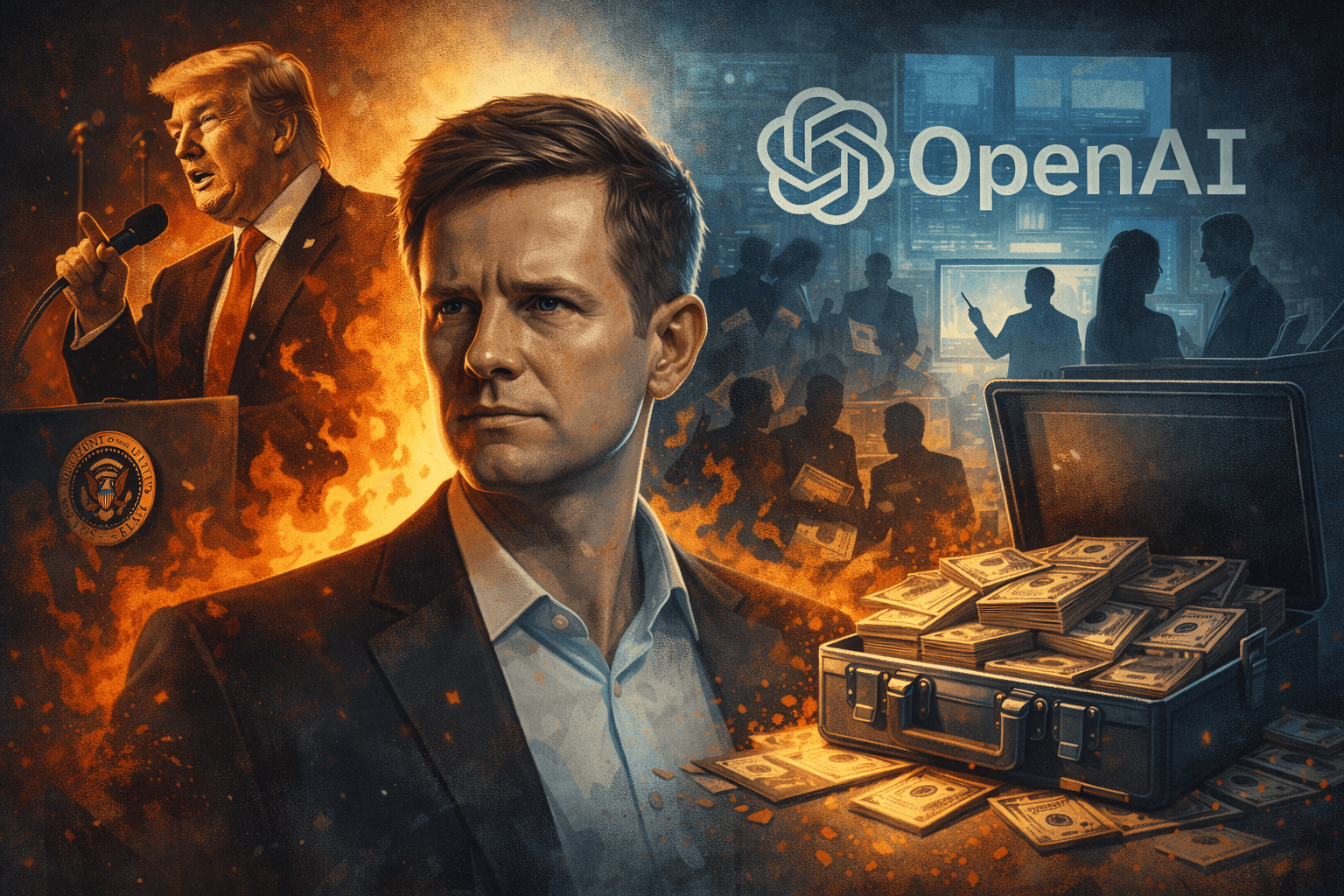
Greg Brockman, OpenAI’s president, has drawn fresh scrutiny after reports that he donated millions to Donald Trump aligned political efforts, then defended the move to WIRED as consistent with OpenAI’s mission to benefit humanity. The justification is sweeping, moral, and conveniently difficult to disprove, which is exactly why it is inflaming internal disagreement and public suspicion at the same time.
What is being tested is not only Brockman’s judgment, but the premise that leaders of frontier AI companies can act like private diplomats, spending personal fortunes on political outcomes while insisting the company’s ethical narrative remains intact.
Power, as a Personal Side Project
In Silicon Valley, money often arrives wrapped in a philosophy. When an executive frames a partisan donation as a humanitarian act, it turns democracy into a product decision, something optimized in private and announced after the fact. Brockman’s argument, as described, asks the public to accept that the same people building systems with unprecedented influence should also be trusted to steer political power toward the right hands, quietly, strategically, and for the greater good.
The problem is not that tech leaders have politics, everyone does. The problem is scale and asymmetry. A multimillion dollar donation is not a vote, it is leverage. And when that leverage comes from a leader whose company is actively negotiating regulation, safety norms, and government partnerships, the line between personal conscience and corporate interest stops looking like a line at all.
Governance Is a Story Until It Is a Test
OpenAI sells more than models, it sells stewardship. The company’s credibility depends on the belief that its leaders are unusually careful with power, unusually sensitive to incentives, unusually capable of self restraint. Political giving that appears to contradict employee values or public expectations does not just irritate the workforce, it chips at the brand promise that governance is real and not decorative.
There is also a psychological tell in the phrase for humanity. It is the kind of language that can justify anything, because it relocates accountability from outcomes to intent. If results go badly, the donor can claim the motive was noble. Yet in politics, noble motives do not prevent harm, they often provide cover for it.
The Uncomfortable Future of AI Influence
This moment hints at a future where AI leadership is not merely technical or managerial, but openly geopolitical. If executives believe elections and regulatory regimes are variables in an alignment plan, then political spending becomes part of the safety stack, and dissent becomes a threat to the mission. That is a dangerous mindset, even when held by intelligent people who sincerely believe they are acting responsibly.
What lingers is a simple unease. If benefiting humanity requires choosing who should hold power, and paying to help them win, then the real question is not whether the mission is sincere. The question is whose humanity gets counted when the check clears.