
Summary
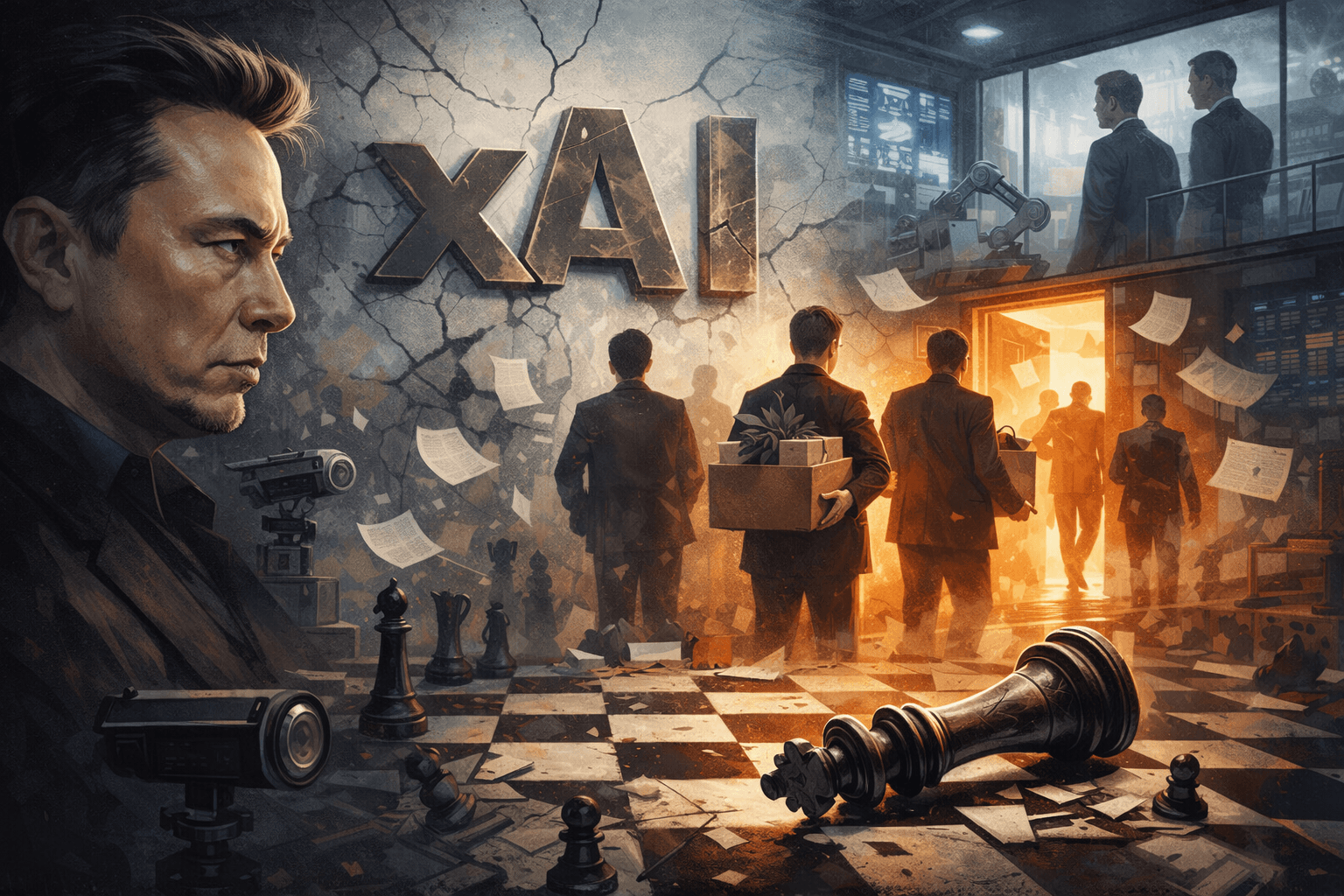
A wave of departures from xAI, reportedly at least nine engineers including two co founders, has turned into a public referendum on what kind of company Elon Musk is building, and how brittle it might be. Online, the exit count is being read as a verdict. Musk, in response, is framing it differently, suggesting these were push decisions rather than irresistible offers pulling talent away.
That distinction matters because it shifts the story from a talent market problem to a governance problem. If people are leaving because they are pushed out, then the question is not compensation or prestige, it is control, culture, and the cost of dissent inside a high velocity AI lab.
The fight over the narrative
Musk has always treated messaging as part of product. When leadership implies exits are push, not pull, it is an attempt to preserve the idea that the mission remains magnetic, and that any churn is simply the removal of misalignment. But in elite engineering circles, the subtext reads harsher. It signals an environment where disagreement can become disqualification, and where loyalty is measured less by output than by posture.
In AI, where timelines are uncertain and evaluation is messy, culture becomes a governance system. A company can tolerate technical ambiguity, but it cannot tolerate social ambiguity for long. The more leaders insist on ideological clarity, the more the organization risks selecting for conformity over candor, especially when the stakes include model behavior, safety posture, and what gets shipped under pressure.
Why exits hit harder in AI labs
Turnover is common in tech, but it lands differently in frontier model teams. The work is cumulative, the tacit knowledge is real, and the competitive edge often sits in undocumented judgement calls. Losing senior people is not just losing hands, it is losing the memory of why certain shortcuts were rejected, and which risks were judged acceptable at the time.
Investors and partners also interpret personnel turbulence as a proxy for internal truth. Even if the product keeps moving, the story becomes that the company is burning social capital to buy speed. That trade can be rational, until the bill comes due in the form of regressions, trust failures, or a sudden inability to recruit the next tier of builders who do not want to live inside a permanent controversy machine.
A company shaped by stress
If Musk is right that departures were pushed, the uncomfortable implication is that xAI is actively pruning. Pruning can be strategic, but it is also revealing. It tells you what the organization cannot metabolize, and what kind of friction it refuses to pay for. In an industry that needs internal critics as much as it needs optimists, that choice has consequences that do not show up on a sprint board.
The deeper question is not whether xAI will survive this week of announcements. It is whether an AI lab can remain inventive while treating employment as a public loyalty contest, and whether the rest of the sector will copy the pattern if it appears to work. In the end, the models will be judged by their outputs, but the companies will be judged by the kinds of people they keep, and the kinds of people they cannot.